
Services & Works
Electrical Earthing
Design and installation of electrical earthing systems to protect people and equipment and meet safety requirements, carried out to the applicable standards (IS 3043). Both pipe earthing and plate earthing, with earth plates up to 12 mm.
Overview
About Electrical Earthing
Earthing gives fault current a safe, low-resistance path to ground. Without it, a fault can leave metal enclosures live, damage equipment, or fail to trip the protection that would have cleared it. Good earthing protects people first and equipment second, and it is a basic requirement of electrical safety.
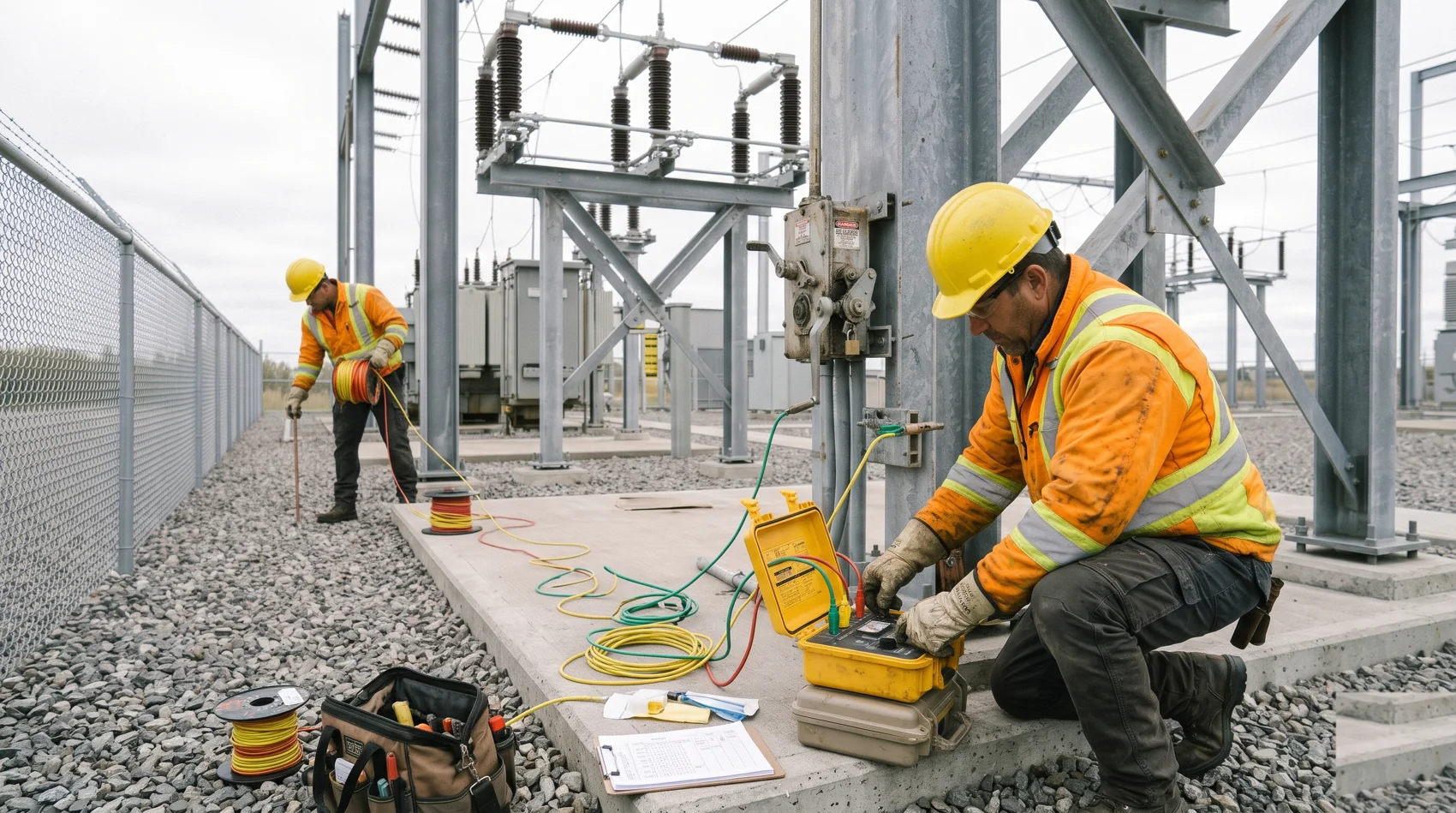
We design and install pipe and plate earthing to IS 3043, including earth electrodes and earth pits, bonding of equipment and earth resistance testing to confirm the result. Soil conditions vary widely, so the design depends on measured site conditions and on the resistance the installation must achieve.
To plan the work, please share
- Type of installation and the equipment to be protected
- Soil conditions, or earlier resistivity readings if you have them
- The earth resistance value the installation must achieve
- Space available for electrodes and earth pits
- Equipment and structures that need bonding
Process
- 01Design
- 02Install
- 03Bond
- 04Test
Scope
- Pipe and plate earthing
- Earth electrode and earth pit installation
- Equipment bonding
- Earth resistance testing
Applications
- Industrial facilities
- Commercial and institutional sites
- Infrastructure and utility projects
Related products
Related reading
FAQs
Common questions
- Why is earthing important?
- Earthing provides a safe path for fault currents, protecting people and equipment and supporting compliance.